
Starlight Tools directory
Marine & Boating Calculators
34 free, browser-based tools. No account required.
- Free to use
- Runs in your browser
- No account required
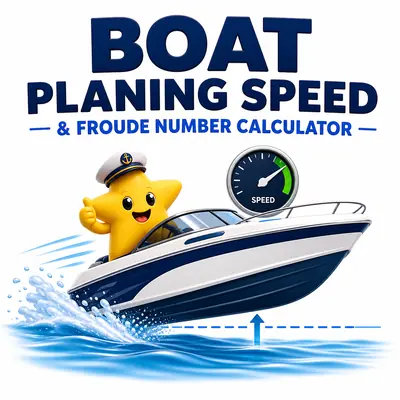
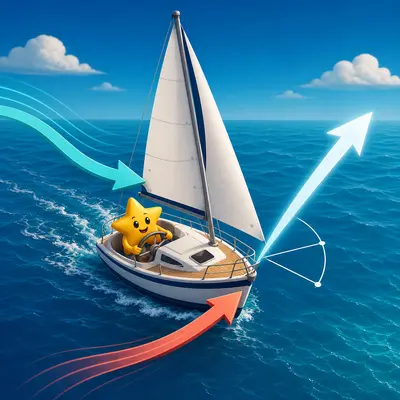
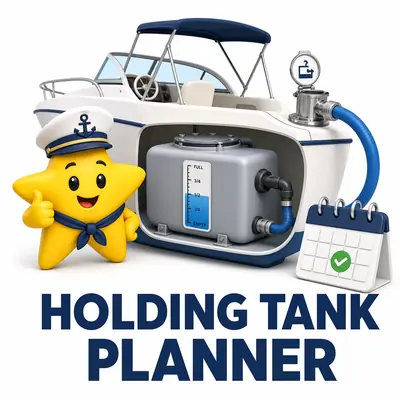
Plan time on the water with private, browser-based boating calculators. Convert knots, nautical miles, metric and statute units, and Beaufort wind force; calculate loaded longitudinal center of gravity, fore-and-aft weight distribution, corrective weight shifts, and optional trim change; estimate antifouling bottom-paint area, coats, volume, and cans; size preliminary sacrificial-anode mass, capacity, and count; convert true wind, boat speed, and angle into apparent wind; project boat loan payoff and recurring ownership costs; compare great-circle and rhumb-line distance and true bearing between coordinates; total engine horsepower and calculate loaded power-to-weight; compare effective towing power with delivered propeller or engine brake power; estimate transient dock-line length and diameter; total loaded boat trailer weight and check towing limits; estimate bilge pump capacity from observed water accumulation and installation assumptions; estimate tide height and continuous passage windows from entered high and low waters; calculate sailing distance, average speed, or passage time; calculate loaded boat displacement and compare onboard weight with a published capacity; screen draft and under-keel clearance using depth, tide, squat, motion, and uncertainty allowances; calculate anchor rode; estimate displacement hull speed; calculate length Froude number and planing-reference speed; compare sail area with displacement; compare propeller pitch and slip; or calculate fuel tank capacity, trip fuel, reserve, range, freshwater endurance, holding-tank pump-out timing, battery-bank runtime, shore-power load and per-leg capacity, marine DC wire size, voltage drop, and marina fuel cost. No account or uploaded vessel data is required.























Marine and boating calculator FAQs
How can I estimate boat loan payoff and ownership cost?
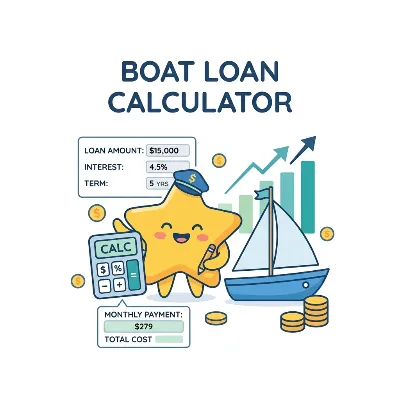
Project the current balance with the loan's interest rate, scheduled payment, and any principal-only extras. Keep recurring operating costs—such as insurance, storage, maintenance, fuel, registration, and taxes—separate from principal repayment so cost and cash outlay are not confused.
How is loaded boat trailer weight calculated?
Add the actual empty trailer, boat, separately listed engine, carried fuel, batteries, equipment and every other item on the trailer. Then compare the total with all vehicle, hitch and trailer limits and verify it on suitable scales.
How is bilge pump capacity estimated?
Add estimated incoming water to the flow needed to clear a standing volume in the target time, apply the selected capacity reserve, then divide by the expected installed-output fraction to estimate a pump label rating.
How is loaded boat displacement calculated?
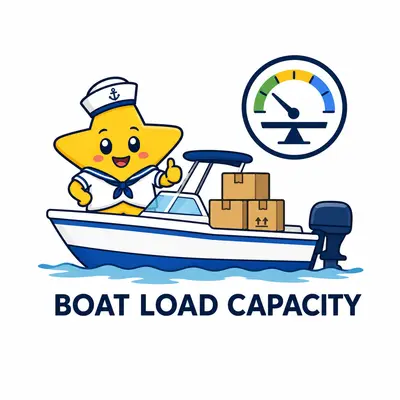
Add the known base boat weight and every onboard load not already included: people, machinery, fluids, equipment, cargo, and gear. At static equilibrium, the total boat weight equals the weight of water displaced.
How is loaded boat LCG and trim change calculated?
Multiply the starting boat and every added weight by their longitudinal stations, add the moments, and divide by loaded weight to find LCG. When valid vessel-specific LCF and MCT data are available, divide the added trimming moment about LCF by MCT to estimate the small change in fore-and-aft draft difference.
How is under-keel clearance calculated?
Subtract actual loaded draft from available water depth. A conservative screening estimate can also deduct separately assessed squat, vessel-motion, other draft, and depth-uncertainty allowances before comparison with the controlling minimum.
How can I estimate a tide-height passage window?
Enter three consecutive official high and low water times and heights, calculate the required tide height from depth and vessel inputs, and find where a simplified curve crosses that threshold. Treat the result as a screening estimate, not an official prediction or safe-passage decision.
How is anchor rode length calculated?
Add water depth, expected tide rise, and the height of the bow attachment above the water, then multiply that vertical distance by the selected scope ratio. The complete rode includes both chain and rope.
How much antifouling bottom paint do I need?
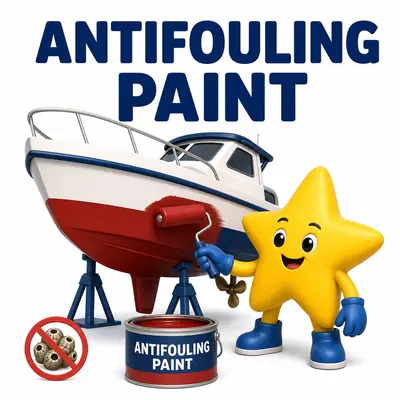
Divide measured or estimated underwater hull area by the exact product's labeled coverage, multiply by the required full and partial-area coats, and apply a defensible loss allowance. Divide by the actual package size and round up to whole cans.
How is displacement hull speed estimated?
The common rule of thumb is 1.34 multiplied by the square root of loaded waterline length in feet, producing knots. It is an approximate wave-resistance threshold rather than a hard maximum speed.
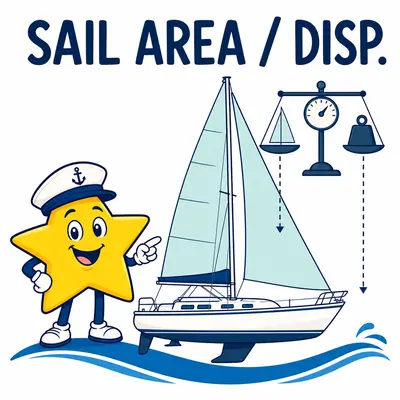
How is sail area-to-displacement ratio calculated?
Divide upwind working sail area in square feet by displacement in pounds divided by 64, raised to the two-thirds power. For meaningful comparisons, keep the sail-area definition and loading condition consistent between boats.
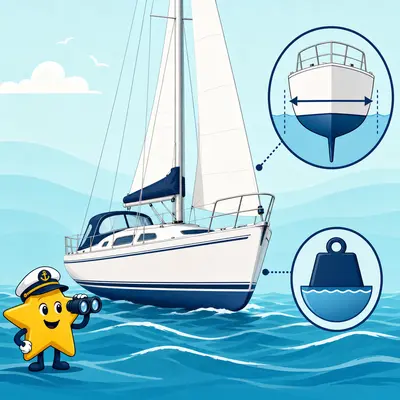
How is sailboat ballast ratio calculated?
Divide documented ballast weight by total displacement for the same loading condition, then multiply by 100. The percentage alone is not a stability rating because ballast position, hull form, center of gravity, freeboard, and the full GZ curve also matter.
How is sailing passage time calculated?
Divide planned route distance by a realistic average speed over ground. A 120-nautical-mile route at a steady average of 6 knots takes 20 hours before any separately assessed margin.
What does boat propeller slip mean?
Propeller slip is the difference between theoretical travel from pitch and actual travel through the water. Some slip is necessary for a propeller to produce thrust, and slip percentage is not the same as propeller efficiency.
How is marine propulsive efficiency calculated?
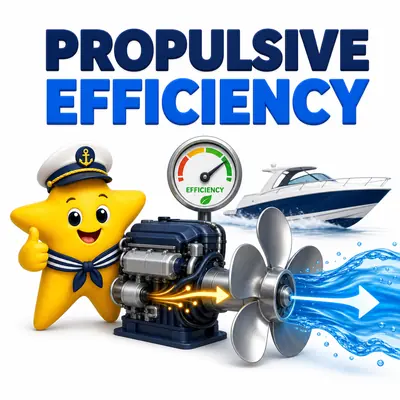
Multiply total towing resistance by vessel speed through water to find effective power. Divide effective power by delivered propeller power for the quasi-propulsive coefficient, or by engine brake power for overall propulsive efficiency.
Why is boat fuel use measured in GPH?
Boat resistance changes greatly with speed, hull, load, weather, and sea state. Gallons per hour or liters per hour therefore gives boaters a practical burn rate at a known operating condition.
Does the boat fuel calculator include a reserve?
Yes. You can choose a reserve percentage and see both expected trip burn and the total fuel recommended with that additional reserve.
How is boat battery-bank runtime estimated?
Calculate bank voltage and amp-hours from the series-parallel layout, reduce capacity for the selected state-of-charge range and battery health, then divide by battery-side current. An optional Peukert exponent can approximate discharge-rate effects.
How is boat freshwater tank duration calculated?
Subtract the protected reserve volume from the current water aboard, then divide the available water by crew-dependent plus shared daily use. Keep an independent drinking-water backup and allow for gauge error, delays, leaks, contamination, and refill uncertainty.
How is boat shore-power capacity calculated?
Multiply RMS load voltage by current to get apparent power in volt-amps. On 125/250 V split-phase service, track each 125 V leg separately because one leg can reach its current rating before the combined service reaches its total apparent-power capacity.
How is marine DC wire size estimated?
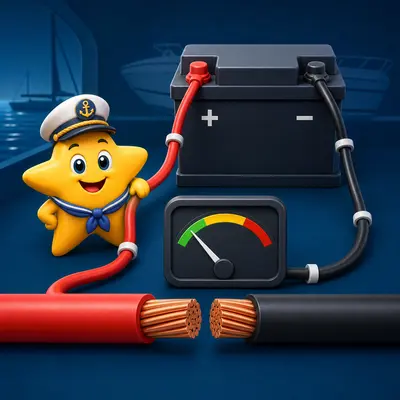
Calculate the minimum conductor area for the chosen voltage-drop limit over the full positive-and-negative circuit, compare it with temperature- and bundle-adjusted ampacity, and use the larger standard wire size as a planning starting point.
How is marine fuel tank capacity calculated?
Choose the regular tank shape, enter internal dimensions, and apply the relevant rectangular, circular-cylinder, or elliptical-cylinder volume formula. A geometry estimate should be checked against the permanent tank label.
Can calculator results replace a passage or safety plan?
No. Treat results as estimates and verify them against engine data, measured fuel burn, tank usability, weather, currents, sea state, local requirements, and the judgment of the vessel operator.
About these marine and boating tools
Boating calculations need units and assumptions that road-trip tools usually omit. This collection is designed around nautical miles, knots, hourly fuel burn, multiple engines, usable tank capacity, and reserve planning. It is useful for early trip budgeting and for checking measured vessel performance.
Conditions on the water can change consumption significantly. Fouling, trim, load, wind, waves, current, engine condition, and throttle setting all matter. Use conservative values, keep an appropriate safety reserve, and rely on onboard measurements and official engine documentation for operational decisions.